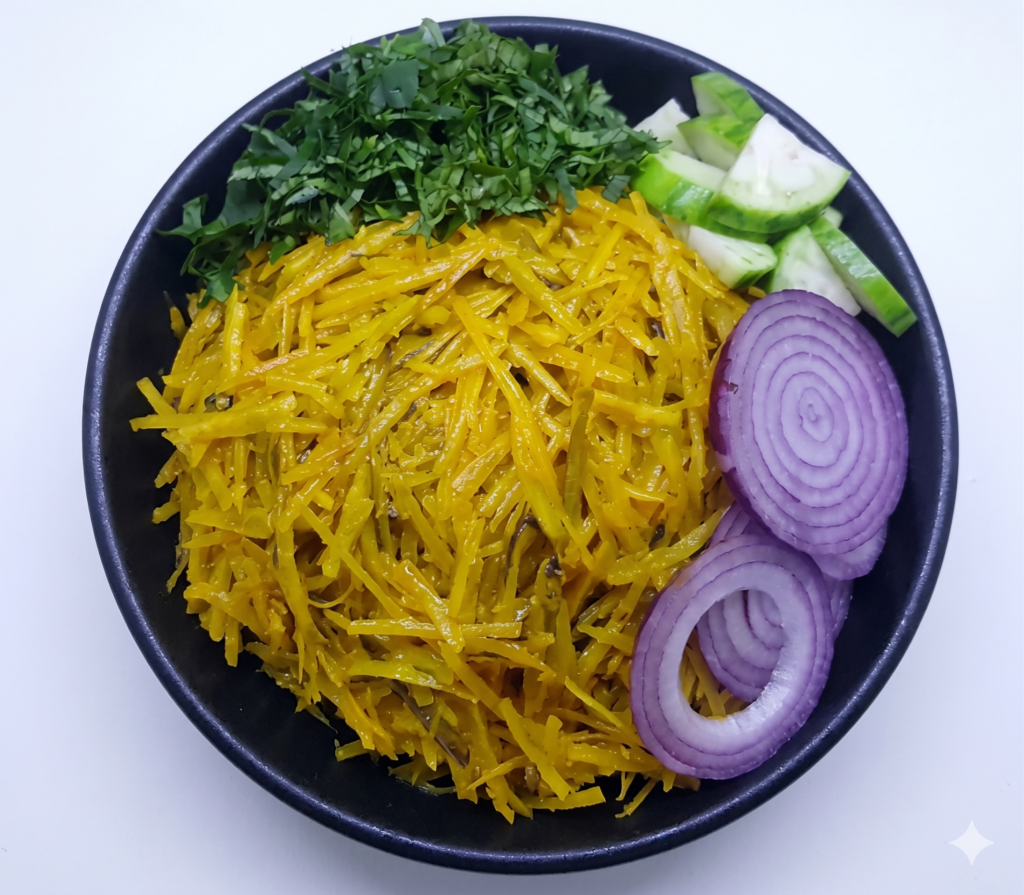
Abacha — known in English as African Salad — is one of the most celebrated dishes of the Igbo people of south-eastern Nigeria. Made from dried, shredded cassava soaked and tossed in a boldly spiced palm oil dressing, it is a dish that is both humble in its ingredients and extraordinary in its flavour. You will find it at Igbo naming ceremonies, traditional weddings, community gatherings, and Sunday tables from Enugu to Aba — and increasingly at Nigerian parties across the UK, where it never fails to stop a conversation and clear a plate.
What makes Abacha irresistible is the intensity of contrast: chewy cassava strands soaking up a richly seasoned amber dressing of palm oil, ground crayfish, and scotch bonnet heat, cut through by the pleasantly bitter edge of fresh utazi leaves. Garden eggs add crunch and colour, while ugba — African oil bean — brings a smoky, fermented depth that keeps everyone reaching for more. Served at room temperature with no reheating required, it is the kind of food that tastes even better eaten slowly, with good company and good conversation.
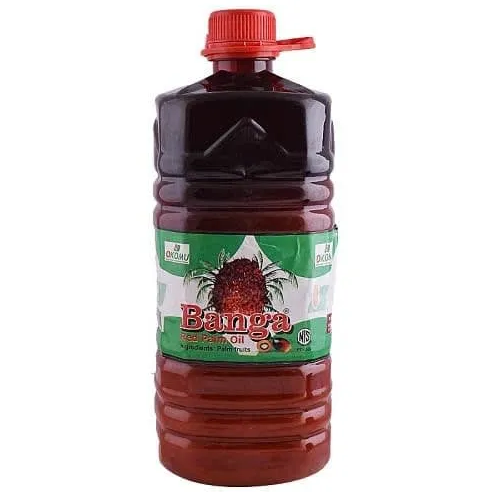
Everything you need to make authentic Abacha at home is available at Awuf Afro Store — from Delex Abacha shreds and Banga palm oil to fresh utazi leaves, Awuf Grounded Crayfish, garden eggs, and fresh scotch bonnet peppers. Order online and have it delivered straight to your door, anywhere in the UK.
Ingredients
Serves 4
| Quantity | Ingredient |
|---|---|
| 400g (2 packs) | Abacha (dried cassava shreds) (soaked and drained) |
| 5 tablespoons | Palm oil |
| 2 tablespoons | Ground crayfish |
| small bunch | Fresh utazi leaves (thinly shredded) |
| 1 medium | Red onion (thinly sliced into rings) |
| 2 cubes | Maggi Star seasoning cubes (crumbled) |
| 4 small | Garden eggs (African eggplant) (quartered, to garnish) |
| 1–2 peppers | Fresh scotch bonnet pepper (finely chopped, adjust to heat preference) |
| 50g | Dried catfish fillet (bones removed, flaked) |
| small piece (about ½ tsp dissolved) | Potash (akanwu / kanwu) (coming soon to Awuf Afro Store — see tips for substitute) |
| 100g | Ugba (African oil bean / ukpaka) (coming soon to Awuf Afro Store — see tips) |
| to taste | Salt |
Add Ingredients to Your Basket
Tick the items you need and add them all at once:
Method
- Place the Delex Abacha (both 200g packs) into a large bowl and cover with cold water. Leave to soak for 10–15 minutes until the strands are soft and pliable but still have a slight bite — they should not turn mushy. Drain thoroughly and squeeze out any excess water with your hands. Set aside.
- If using potash (akanwu), dissolve a small piece in 2 tablespoons of cold water, stir well, then strain through a fine sieve to remove any grit. Set the clear potash water aside. (Potash is coming soon to Awuf Afro Store — see tips below for how to make a delicious Abacha in the meantime.)
- Check through the Awuf Dried Catfish Fillet and remove any remaining bones. Break the fish into small flakes and set aside.
- Pour 5 tablespoons of Banga Palm Oil into a large mixing bowl. If using potash solution, add 1–2 tablespoons of it now and stir briskly with a wooden spoon for 2–3 minutes — you will see the oil change from deep orange to a bright yellow and thicken into a glossy, clinging dressing. This is the signature step that makes Abacha coating so beautiful. Without potash, simply mix the oil well before adding other ingredients.
- Add 2 tablespoons of Awuf Grounded Crayfish to the palm oil dressing. Crumble in the 2 Maggi Star seasoning cubes. Add the sliced red onion and finely chopped scotch bonnet pepper (start with one and taste — you can always add more heat). Mix everything together thoroughly.
- Add the flaked dried catfish and the ugba (African oil bean) if you have it. Stir gently to combine. Taste the dressing and adjust with a pinch of salt if needed — it should be bold, punchy, and deeply savoury.
- Tip the drained abacha into the bowl. Using clean hands or a large spoon, toss and fold the abacha into the dressing for 2–3 minutes until every strand is evenly coated and glistening with a deep amber colour.
- Transfer to a wide serving platter or bowl. Arrange the quartered garden eggs around the edges and scatter the shredded Awuf Fresh Utazi Leaves generously over the top. Serve immediately at room temperature — no heating needed.
Tips & Variations
- Potash (akanwu) is the traditional secret ingredient that emulsifies the palm oil into a thick, glossy dressing that clings perfectly to each abacha strand. It is coming soon to Awuf Afro Store! As a substitute, dissolve a very small pinch of baking soda in a tablespoon of water and add it to the palm oil — stir well and add sparingly, as too much will turn the dressing bitter.
- Ugba (African oil bean / ukpaka) is what elevates Abacha from great to unforgettable — its smoky, fermented depth is deeply Igbo. It is coming soon to Awuf Afro Store. In the meantime, your Abacha will still be delicious without it; if you can find ugba locally at an African shop, add it at step 6.
- Abacha does not keep well once dressed — the dressing becomes greasy when cold and the texture suffers on reheating. Make only what you plan to eat in one sitting, and serve it fresh from the bowl.